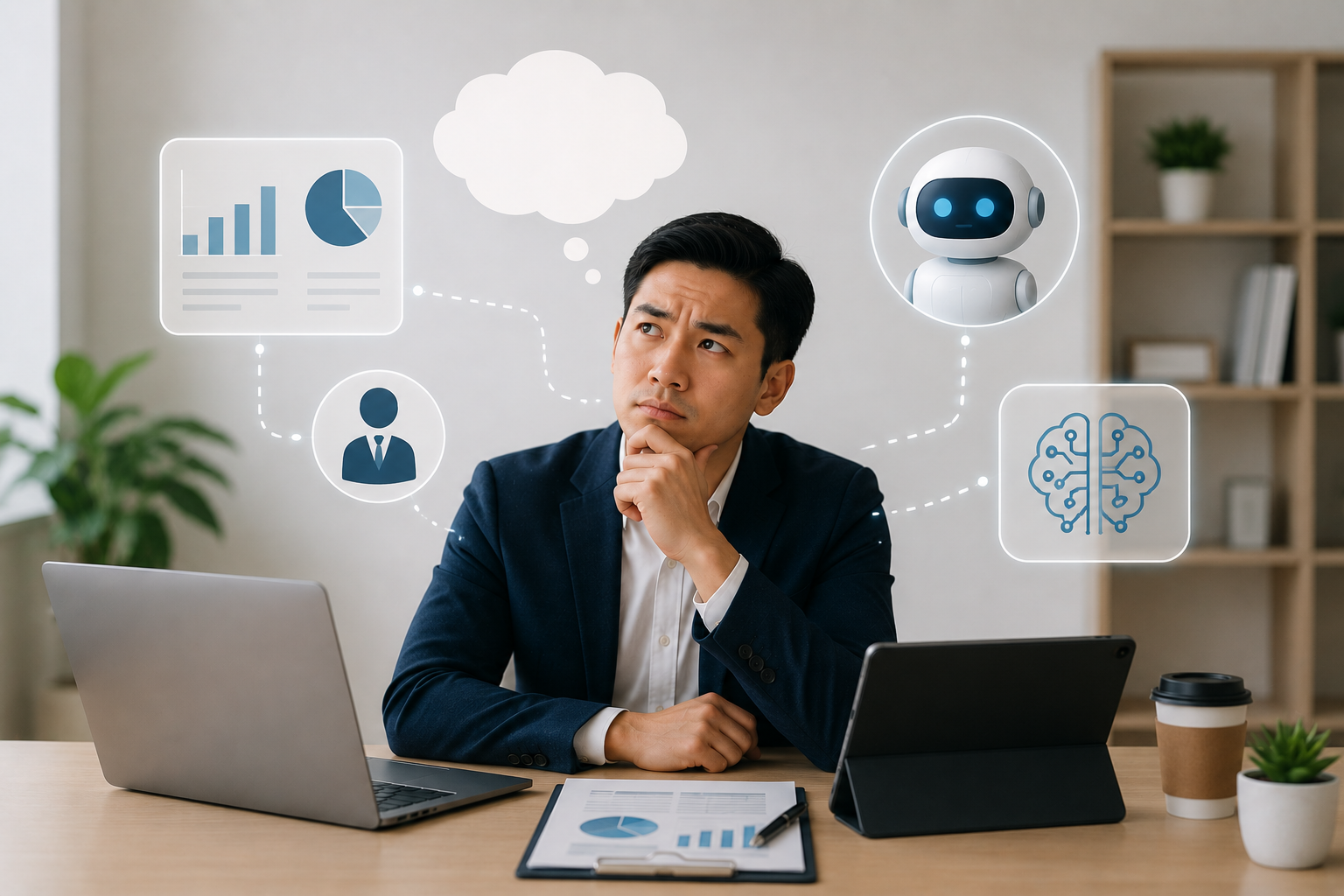
The digital landscape is evolving, and the role of accountants is often likened to that of a ship’s navigator, expertly charting a course through treacherous financial waters, even when automated tools like Xero are at the helm.
With Xero and AI-powered accounting tools, businesses can now effortlessly track expenses, generate invoices, and balance their books with unprecedented ease, begging the question: do traditional accountants still have a place in this streamlined world?
The answer is more nuanced than a simple yes or no, as while technology has undoubtedly augmented accounting capabilities, human expertise remains indispensable in navigating the complexities of financial planning, compliance, and strategy.
Like a seasoned chef who uses high-tech kitchen gadgets to elevate their craft, accountants can leverage Xero and AI to refine their services, offering higher-level guidance and consultation.
As businesses in Singapore and beyond continue to adopt these innovative tools, the interplay between technology and traditional accounting expertise will be crucial in unlocking long-term financial success.
Can AI-Powered Accounting Software Like Xero Replace Human Accountants Completely?
The rise of AI-powered accounting software like Xero has transformed the accounting landscape, enabling businesses to streamline financial management and reduce manual errors.
As technology continues to advance, the question on everyone’s mind is whether these automated systems can completely replace human accountants.
With its automated data entry, invoicing, and expense tracking features, Xero has become a popular choice among businesses.
The future of accounting hangs in the balance as AI-powered software threatens to upend the traditional role of human accountants.
- Automation is revolutionizing accounting tasks, freeing up time for more strategic and advisory services.
- Machine learning algorithms can analyze financial data and identify patterns, enabling predictive analytics and forecasting.
- The accounting skills gap is widening as professionals struggle to keep pace with the rapid evolution of technology and its applications in the field.
Using Xero and AI for Automated Accounting Tasks and Data Analysis Purposes
As businesses navigate the complexities of managing finances, they likely find themselves spending countless hours on tedious accounting tasks, taking away from time that could be spent on growth and strategy.
The accounting process can be optimized with the right tools.
With the integration of Xero and AI, businesses can automate tasks such as data entry, invoicing, and reconciliations, freeing up more time for high-level financial analysis and planning.
This combination enables businesses to leverage machine learning algorithms to uncover insights and trends in their financial data, helping them make better decisions.
By automating routine tasks, businesses can reduce errors and increase efficiency.
Benefits of Combining AI Accounting Software with Human Accountant Expertise Services
A small business in Singapore, struggling to manage its finances, found solace in combining AI accounting software with human accountant expertise services, resulting in improved financial reporting and compliance.
The AI software handled mundane tasks such as data entry and invoicing, freeing up the human accountant to focus on higher-level tasks like financial analysis and strategy.
This synergy enabled the business to make more informed decisions and stay ahead of the competition.
As the business grew, the combined approach allowed for seamless scalability and adaptability.
The integration of AI accounting software and human accountant expertise services enabled the business to leverage the strengths of both, resulting in enhanced accuracy and efficiency.
The AI software’s ability to process large amounts of data quickly and accurately complemented the human accountant’s expertise in interpreting and analyzing financial data, providing a comprehensive understanding of the business’s financial situation.
The human accountant’s role evolved from mere number-crunching to focusing on high-value tasks like financial planning, budgeting, and forecasting, allowing the business to make strategic decisions and drive growth.
Meanwhile, the AI software continued to handle routine tasks, ensuring that the business remained compliant with regulatory requirements and avoiding costly errors or penalties.
In the end, the key to unlocking exceptional financial management lies in combining the best of both worlds — harnessing the power of AI accounting software and the expertise of human accountants — to create a seamless, efficient, and effective financial system that drives business success.
Limitations of Accounting Software in Handling Complex Tax Rules and Human Advice
Accounting software can expertly chart the course of financial transactions, but when it comes to navigating the treacherous waters of complex tax rules and the nuances of human advice, it can be as useful as a map without a compass.
The ever-changing landscape of tax laws and regulations can leave even the most sophisticated software struggling to keep pace.
Moreover, the emotional and psychological aspects of financial decision-making, which are often influenced by personal biases and emotions, can be difficult for software to fully capture.
As a result, accounting software can sometimes provide inaccurate or incomplete advice, leading to costly mistakes and missed opportunities.
Furthermore, the lack of human intuition and empathy in accounting software can make it difficult for users to fully understand and trust the advice being provided.
In addition, the complexity of tax rules and the need for human advice can vary greatly depending on the individual or business, making it challenging for accounting software to provide tailored guidance.
The limitations of accounting software in handling complex tax rules and human advice highlight the need for a more holistic approach to financial management, one that combines the efficiency of technology with the expertise and empathy of human professionals.
When Do Small Businesses and Sole Traders Need to Hire a Professional Accountant Service
As a small business or sole trader, managing finances can be a daunting task, especially when it comes to navigating complex tax laws and regulations.
Hiring a professional accountant service can help alleviate this burden and provide peace of mind, allowing business owners to focus on what they do best — running their business.
Additionally, a professional accountant can help identify areas where costs can be reduced and provide valuable insights into financial performance.
By outsourcing accounting tasks, small businesses and sole traders can free up time and resources to invest in growth and development.
Beyond that, a professional accountant can also provide expertise in areas such as financial planning, budgeting, and forecasting, which are essential for making informed business decisions.
They can help small businesses and sole traders understand their financial position, identify potential risks, and develop strategies to mitigate them.
Moreover, a professional accountant can also assist with tax planning, ensuring that businesses are taking advantage of all eligible deductions and credits, and complying with all tax laws and regulations.
Understanding the Role of AI in Accounting and Bookkeeping Processes and Tasks Automation
The integration of AI in accounting is transforming the industry rapidly.
- Managing financial data with automated bookkeeping systems
- Analyzing financial reports to identify trends and patterns
- Automating tasks such as invoicing and expense tracking
- Generating financial forecasts and predictions
- Enhancing security and compliance with regulatory requirements
By leveraging AI, accounting firms can increase efficiency and reduce errors, ultimately providing better services to their clients.
With the help of AI, accountants can now focus on more strategic and advisory roles.
The future of accounting is indeed automated, and it’s exciting to see the impact of AI on this traditional industry.
As AI continues to evolve, we can expect even more innovative solutions to emerge in the accounting and bookkeeping space.
Xero Accounting Software Features and Capabilities for Small Businesses and Entrepreneurs
With a wide range of features and capabilities, Xero accounting software is an ideal solution for small businesses and entrepreneurs.
It streamlines financial management: automating tasks, providing real-time visibility, and enhancing collaboration.
A game changer — for those struggling to keep track of expenses and invoices.
Xero’s cloud-based platform offers unparalleled scalability and flexibility, allowing businesses to grow and adapt quickly.
As entrepreneurs navigate the complexities of financial management — they often find themselves overwhelmed by the sheer volume of tasks: from invoicing and billing to expense tracking and financial reporting, it’s a lot to handle.
Invoices, payments, expenses — all easily manageable through Xero’s intuitive interface.
Xero also integrates seamlessly with a wide range of third-party apps and services, further enhancing its capabilities and possibilities: from payroll and tax management to inventory control and project management, the options are endless.
With its robust security measures and reliable customer support, Xero provides peace of mind for small businesses and entrepreneurs, allowing them to focus on what matters most — growing their business and increasing revenue.
In a nutshell, Xero accounting software is the perfect tool for small businesses and entrepreneurs looking to simplify their financial management and take their business to the next level.
By leveraging Xero’s features and capabilities, small businesses and entrepreneurs can streamline their financial management, reduce costs, and increase efficiency — ultimately driving growth and success.
Common Mistakes to Avoid When Using Xero and AI for Accounting and Bookkeeping Purposes
While many believe that automation is the future of accounting, the reality is that over-reliance on AI can lead to errors and inefficiencies.
In fact, human intuition and expertise are still essential in accounting and bookkeeping.
The myth that AI can completely replace human accountants is far from true.
In contrast, a well-balanced approach that combines the efficiency of Xero and AI with human expertise can lead to more accurate and effective financial management.
“60% of accounting firms believe that AI will have a significant impact on their business in the next 2 years”.
How to Get the Best of Both Worlds by Pairing Xero with Professional Accountant Support Services
By leveraging the capabilities of Xero, a cloud-based accounting platform, and combining it with the expertise of professional accountant support services, businesses can streamline their financial management, enhance accuracy, and gain valuable insights to inform their strategic decisions.
This integrated approach enables companies to capitalize on the benefits of automation, such as reduced manual errors and increased efficiency, while also tapping into the knowledge and experience of seasoned accountants who can provide personalized guidance and support.
As a result, businesses can optimize their financial performance, improve compliance, and make more informed decisions, ultimately driving growth and success.
By pairing Xero with professional accountant support services, companies can create a robust and flexible financial management system that adapts to their evolving needs.
This integrated approach enhances financial management and decision-making.
Pairing Xero with professional accountant support services can help businesses achieve a balance between automation and expert guidance, leading to improved financial performance and strategic decision-making.
The role of the accountant is not diminished, but rather, redefined, as technology like Xero and AI are increasingly integral.
The accountant’s expertise now focuses more on strategic advisory services, leveraging technology to provide insightful analysis and guidance.
Looking ahead, the interplay between human professionals and artificial intelligence will likely yield innovative solutions, making accounting more efficient and accessible.
Ultimately, the union of accountants and technology will empower businesses to make more informed decisions, fostering a future where financial management is both precise and personalized, a testament to the enduring value of skilled professionals in an era of rapid technological advancement.


Disclaimer: The information contained in this blog is for general information purposes only and is not intended as legal advice. While we endeavour to provide information that is as up-to-date as possible, Intime Accounting makes no warranties or representations of any kind, express or implied about the completeness, accuracy, reliability, suitability or availability with respect to the content on the blog for any purpose. Readers are encouraged to obtain formal, independent advice before making any decisions.